UTOPIA URBIS
Within a European network of cultural events dedicated to the theme of utopia, Amor Vacui Studio was invited to reflect on the city of Salerno and the Cilento region. The architectural research began by investigating Thomas More’s theories on the island of Utopia, derived from the Greek meaning “a happy and/or non-existent place”, and Michel Foucault’s ideas on the ship as heterotopia, described as “another space, yet connected to reality.” These theories were then applied to the structure of the city of Salerno, within the framework of the Catalan Courtyard of Palazzo Pinto, at the heart of the historic center.
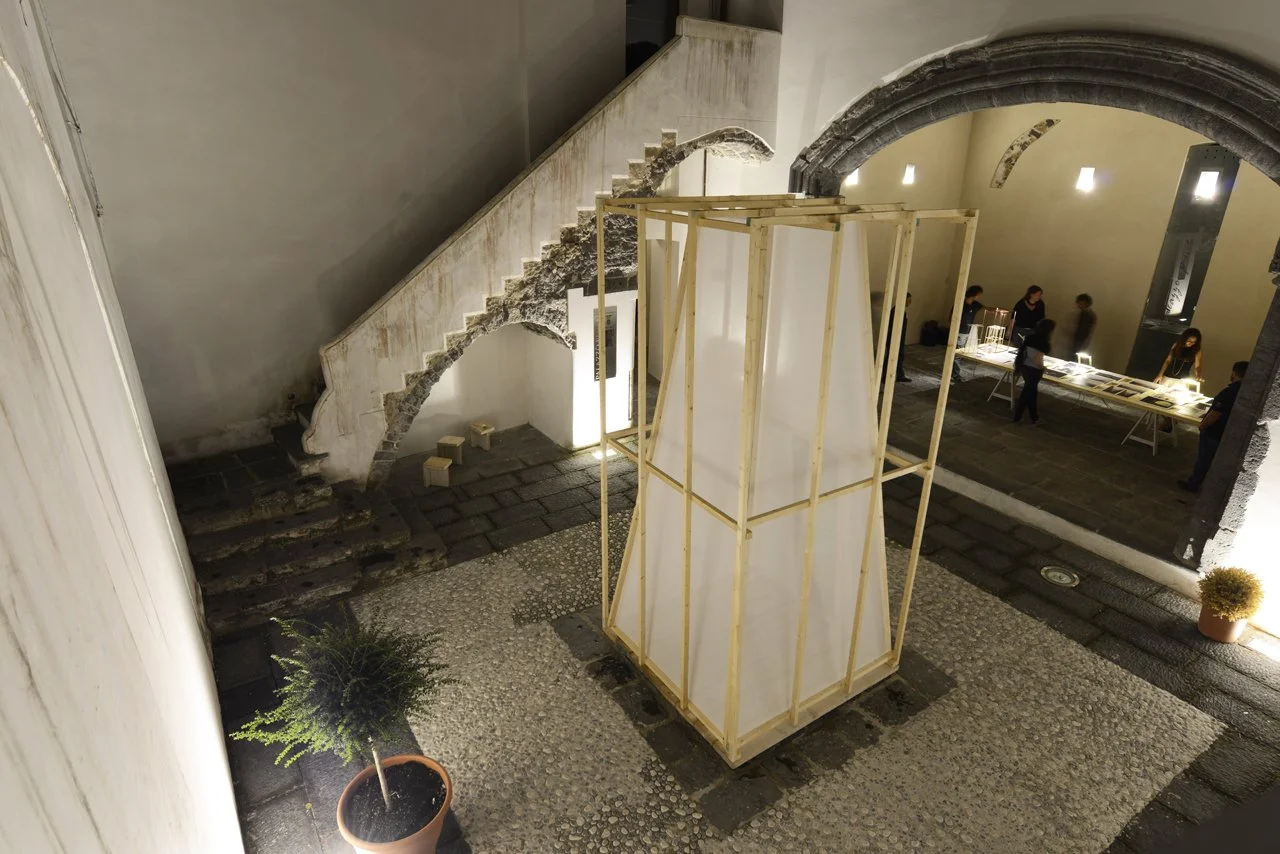
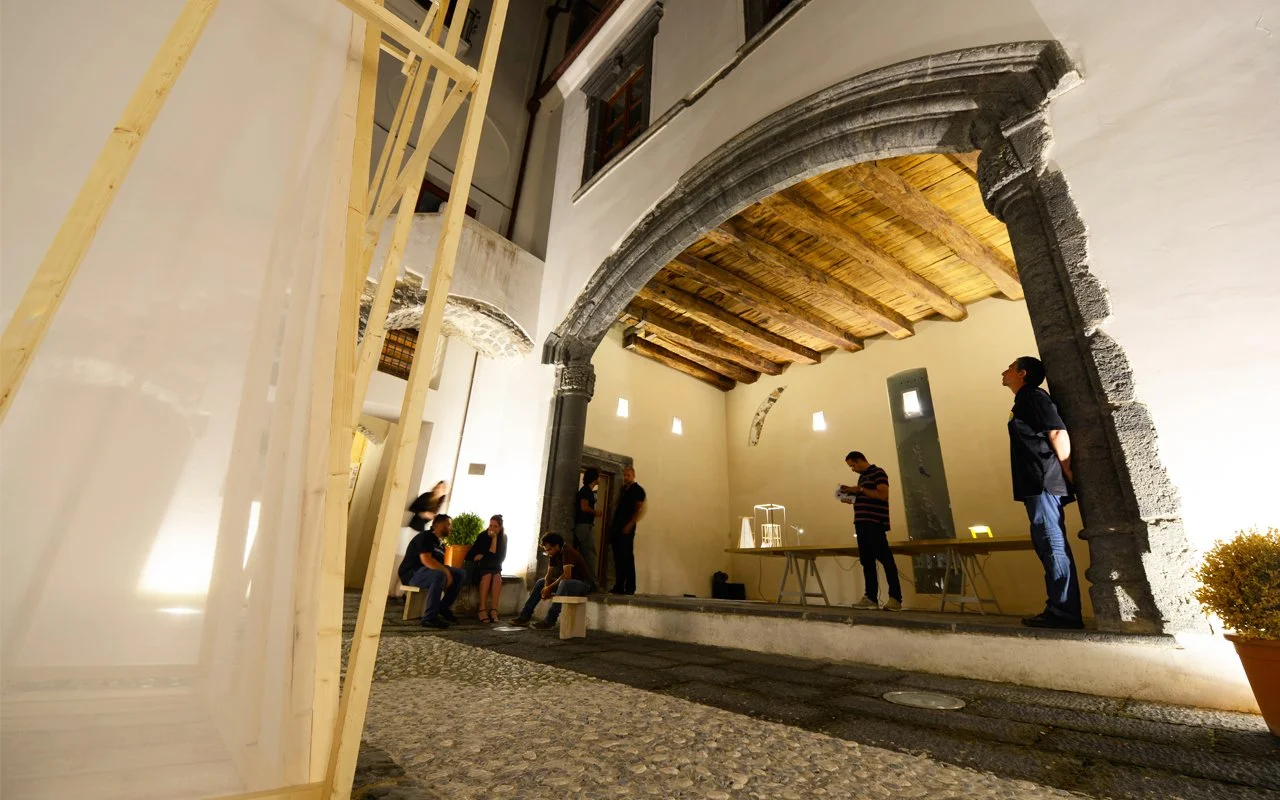
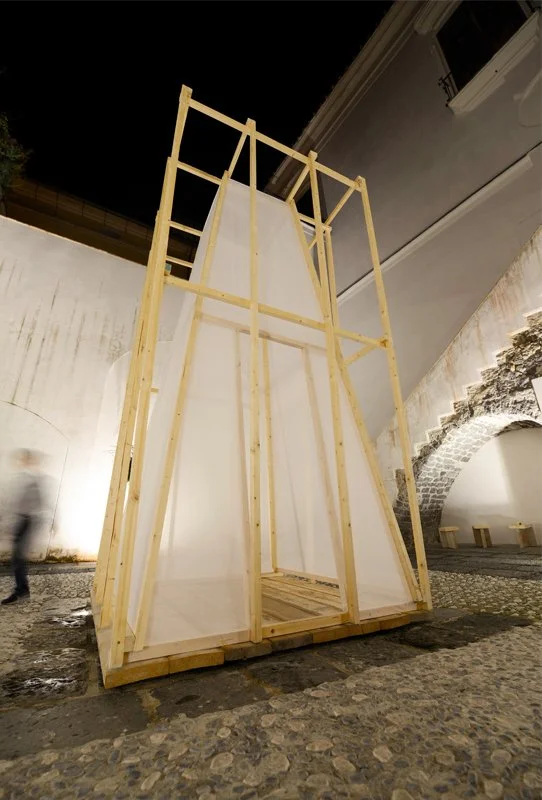
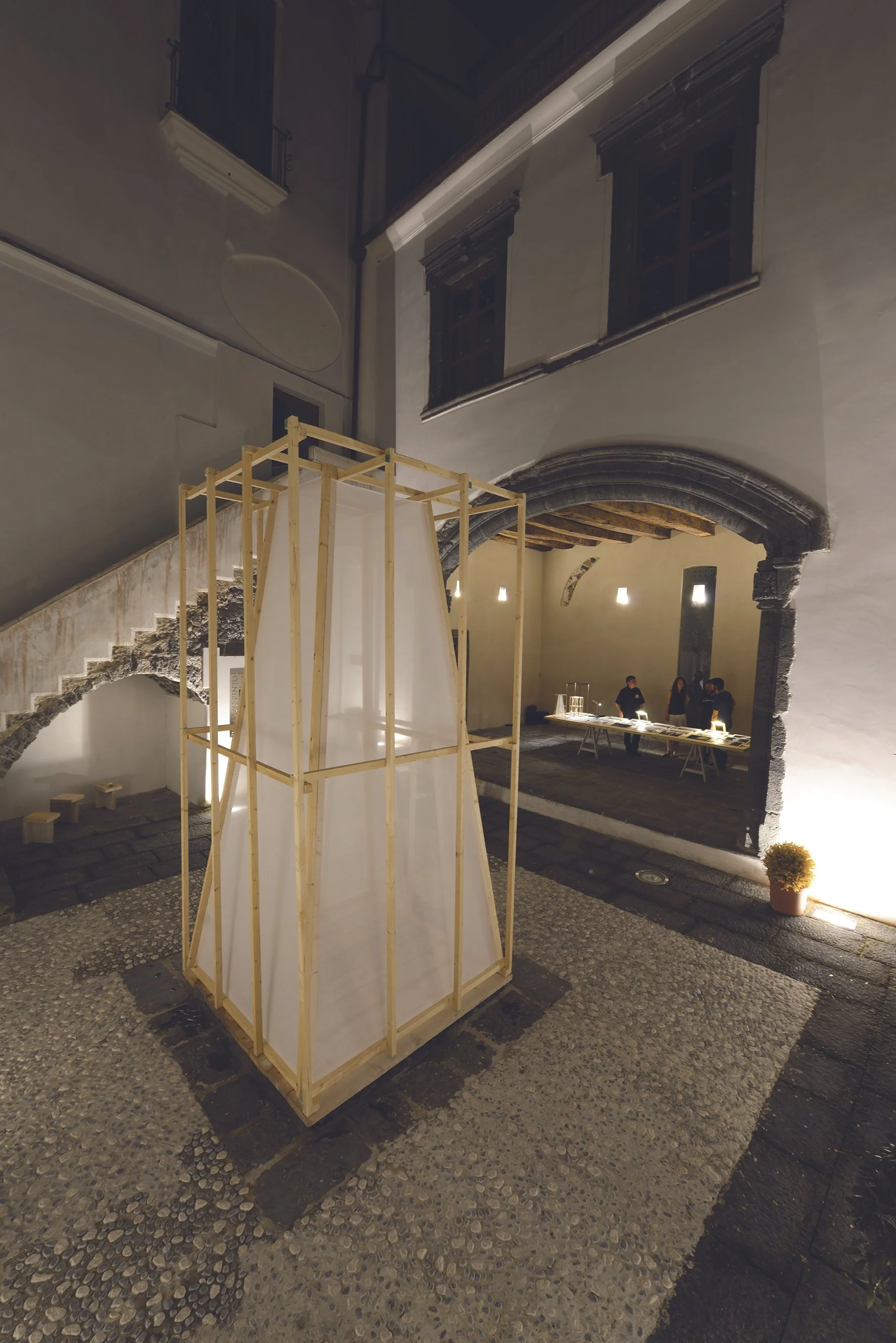
Through the installation of a large lantern, the empty space of the Catalan Courtyard is amplified in its meaning and connected to all the other empty spaces of the city. It projects an invisible beam of light toward the sky, linking the medieval network of streets, gardens, courtyards, and squares upon which the most authentic idea of urban life is founded.
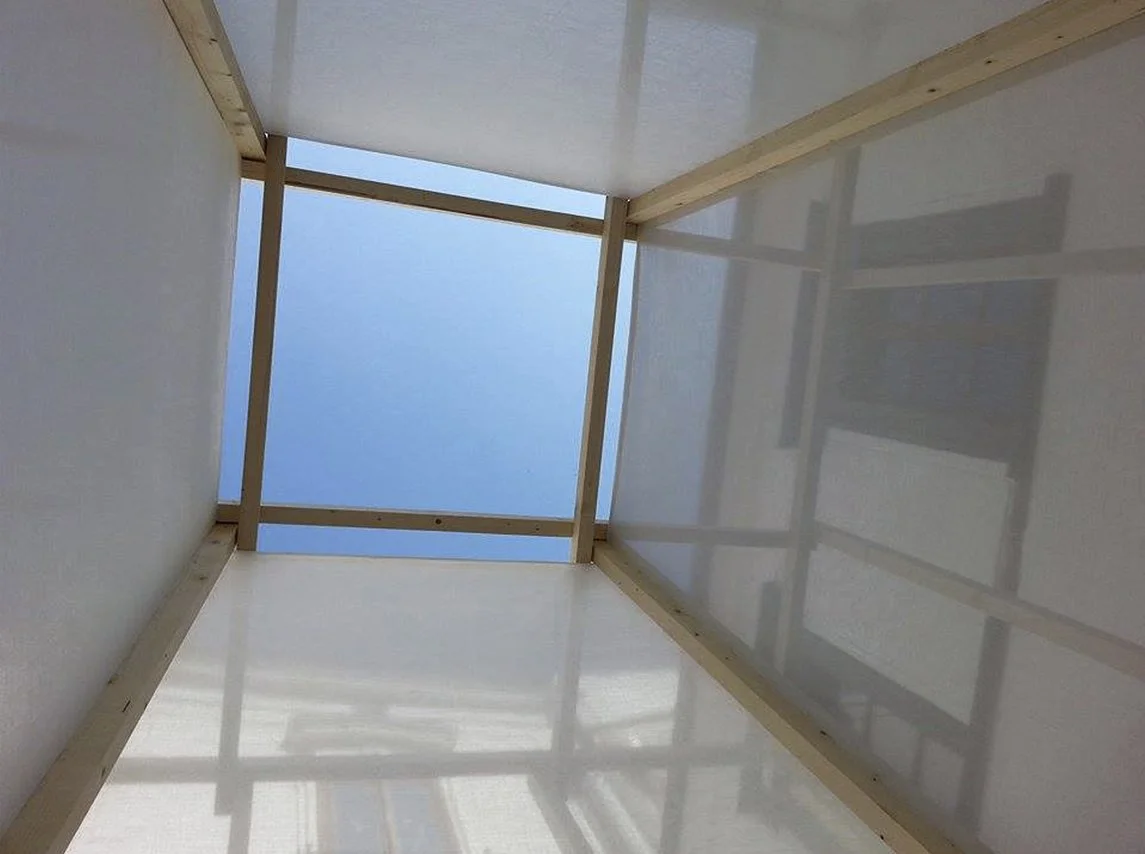
The lantern, designed following the geometries of the Catalan Courtyard, emphasizes the urban experience of a void revealed through movement. It illuminates the space and welcomes visitors, temporarily shielding them from city life and guiding them into a parallel world of silence and abstraction. This delicate, gradual transition is mediated by a lightweight cocoon of translucent walls, serv as a physical symbol of the city’s utopian experience. It invites viewers to look up at the sky, framed by the courtyard’s boundaries, revealing a void made of relationships from which the city was born, lives, and is renewed every day.
It is common to think of the city as fullness, a secular accumulation of stones marking the traces of our past. Yet it is empty space that unites and connects lives, and truly forms the city.
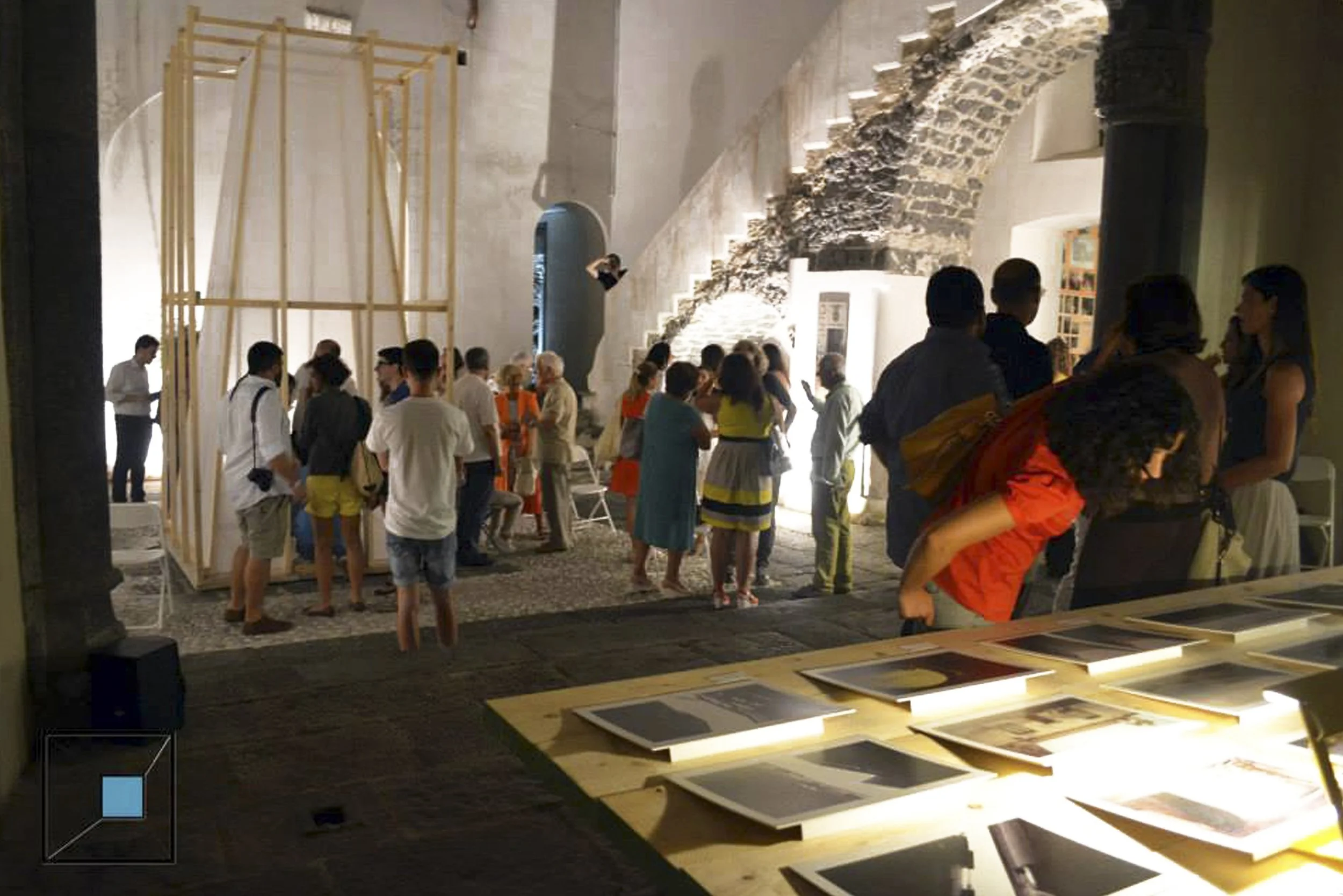
Alongside the installation, we organized a photographic exhibition, inviting several local photographers to share their personal reflections on the city’s constructed utopia.
LOCATION
Salerno, Italy